 Lavamere
Control humidity levels in small washrooms to stop spore proliferation on suspended towels and walls. You will establish dependable ventilation habits that protect both home surfaces and health.

- Relative humidity above sixty percent permits rapid mildew colonization on wet fabrics.
- Mechanical ventilation must run for twenty minutes post-shower to clear latent vapor.
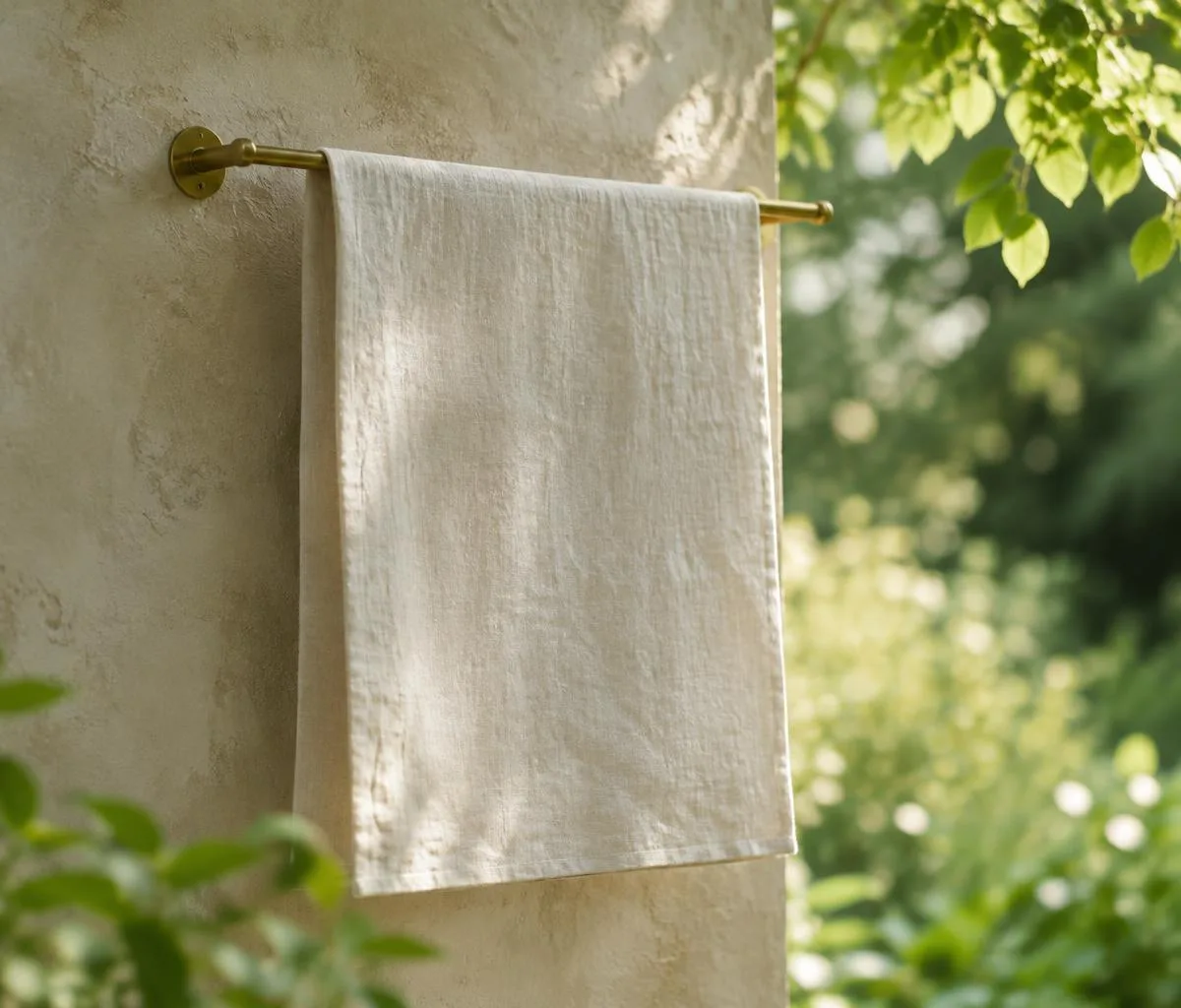
- Adequate spacing between hanging towels prevents persistent damp spots.
The modern bathroom represents a particular engineering compromise within the home. It is designed to introduce substantial volumes of warm water into an enclosed living space, often with minimal natural air exchange. When hot water flows from a showerhead, it shatters into fine droplets, increasing the surface area of the water and accelerating evaporation. Within minutes, the relative humidity inside a standard washroom can climb from an ambient 42 percent to well over 85 percent, transforming the room into an environment favorable to the settlement and reproduction of biological agents.
Among the furnishings exposed to this damp atmosphere, heavy terrycloth towels present the greatest surface area and the highest retention of organic debris. When fibrous textiles remain wet in warm, stagnant air, the emergence of microbial colonies is not an anomaly but an ecological certainty. Managing this dynamic requires an understanding of psychrometric principles, ventilation rates, and textile care, rather than reliance upon perfumed detergents that merely mask the early signs of decay.
The Mechanics of Humidity in Enclosed Bathrooms
The accumulation of airborne moisture within a domestic washroom is governed by vapor pressure and temperature differentials. As water vapor leaves the shower, it disperses throughout the room until the air approaches saturation. The capacity of air to hold moisture is directly linked to its temperature: warmer air supports a significantly greater quantity of water vapor than cooler air. When this warm, moisture-laden air encounters cooler surfaces, such as exterior walls, glazed porcelain tiles, mirrors, and window panes, the air temperature drops below its dew point. Condensation occurs almost instantly, coating surfaces with a fine film of liquid water.
This condensation cycle is not confined to hard surfaces. Porous materials, including painted gypsum drywall, grout lines, and woven textiles, absorb moisture directly from the air through hygroscopic action. If the room lacks sufficient convective currents to carry this moisture outside the building envelope, the absorbed water remains trapped within the substrate. A bathroom left at 78 percent relative humidity for four hours after bathing provides sufficient ambient water for fungal spores to hydrate and enter their active vegetative phase.
Furthermore, enclosed bathrooms without thermal breaks or exterior windows often experience stratified air layers. Warm, humid air gathers near the ceiling and behind closed doors, while cooler, dense air settles along the baseboards. This stratification prevents natural buoyant air displacement, meaning that towels suspended on wall hooks or low rails remain enveloped in localized microclimates of saturated air, long after the shower water has drained away.
Spore Formation on Damp Cotton Linens
Cotton remains the preferred fiber for bath linens due to its exceptional absorbency and soft hand. The microscopic structure of a cotton fiber, however, is a hollow tube composed largely of cellulose. When woven into high-density terrycloth loops, it creates a labyrinth of capillary channels that hold liquid water tenaciously. Unfortunately, these same structural qualities make cotton an ideal substrate for fungal colonizers such as Aspergillus niger, Cladosporium, and various species of Penicillium, alongside opportunistic bacteria like Staphylococcus epidermidis.
The biological progression follows a predictable timeline:
- Inoculation and Hydration: Airborne fungal spores, which exist naturally in all indoor air at background levels, settle upon the damp pile. Simultaneously, the towel collects exfoliated skin cells, sebum, trace mineral salts, and soap scum during use, providing a ready food source.
- Germination: Given relative humidity above 70 percent and temperatures between 20 and 32 degrees Celsius, fungal spores germinate within 24 to 48 hours, producing microscopic root-like filaments known as hyphae.
- Colonization and Metabolic Byproducts: As hyphae extend, they secrete enzymes to break down both the organic residues and, eventually, the cellulose itself. The characteristic sour or musty odor associated with damp towels is the direct byproduct of these metabolic processes, specifically volatile organic compounds such as geosmin and 2-methylisoborneol.
- Sporulation: If the textile remains damp past the 48-hour threshold, the hyphae develop fruiting bodies that release secondary spores, embedding deep into the twisted yarns and resisting standard domestic laundering.
Once a towel reaches the stage of active sporulation, light rinsing or low-temperature laundering will fail to eradicate the colony. The microbes enter a dormant state during drying, only to resume metabolic activity and odor production the moment clean water touches the fabric during the next bath.
Ventilation Ratios and Exhaust Fan Protocols
Mechanical ventilation is the primary defense against the structural and biological consequences of bathroom moisture. Opening an interior door merely displaces humid air into adjacent bedrooms or corridors, where moisture can condense against colder exterior perimeter walls. The moisture must be extracted directly at the source and exhausted outdoors.
Ventilation rates are calculated in cubic feet per minute (CFM). Mechanical engineering standards, such as those published by the Home Ventilating Institute, recommend an extraction capacity of at least one CFM per square foot of bathroom area for rooms up to 100 square feet. For larger spaces, mechanical requirements should be calculated based on the fixtures present:
- Standard shower enclosure: 50 CFM required capacity.
- Bathtub without shower: 50 CFM required capacity.
- Jetted whirlpool tub: 100 CFM required capacity.
- Enclosed water closet: 50 CFM required capacity.
A standard eight-foot by ten-foot bathroom therefore requires a certified airflow rate of no less than 80 CFM. However, duct geometry significantly reduces field performance. A fan connected to a flexible, ribbed duct with two 90-degree elbows may lose up to 35 percent of its rated efficiency due to static pressure resistance. Smooth, rigid metal ducting should be specified whenever possible, pitched slightly toward the exterior termination point to allow any condensation within the pipe to drain outside rather than back into the fan housing.
Operational timing is equally critical. Turning the exhaust fan off upon stepping out of the shower leaves the bulk of the evaporated water in the room. An effective protocol requires the fan to run throughout the entire bathing period and continue operating for 20 to 30 minutes following the conclusion of the shower. Homeowners should consider replacing standard wall switches with digital countdown timers or relative humidity sensors set to trigger automatically at 55 percent relative humidity, ensuring the air volume is fully exchanged multiple times until dry ambient conditions are restored.
Heated Towel Rails and Spacing Practices
The drying rate of a towel is inversely proportional to its folding density. When a wet towel is hung from a conventional peg or robe hook, the fabric gathers into multiple overlapping folds. This arrangement traps moisture in the interior layers, extending the drying period beyond 36 hours. Under such conditions, microbial growth is practically guaranteed.
To establish an effective dry-down curve, linens must be hung flat across broad bars, allowing free air circulation across both the face and back of the fabric. Where wall area allows, double towel bars should provide at least three inches of horizontal clearance between rods so that air can rise freely between adjacent towels via stack-effect convection.
| Hanging Method | Average Drying Duration | Microbial Colonization Risk | Fabric Airflow Exposure |
|---|---|---|---|
| Single Robe Hook / Peg | 32 to 44 hours | Very High | Poor (restricted to outer folds) |
| Unheated Horizontal Bar | 14 to 20 hours | Moderate | Fair (two open faces) |
| Hydronic / Electric Heated Rail | 4 to 7 hours | Negligible | Excellent (accelerated by convective heat) |
Heated towel rails offer a reliable mechanical solution for damp climates or bathrooms that lack direct sunlight. Modern hydronic or hardwired electric rails operate at surface temperatures between 45 and 55 degrees Celsius. This modest thermal output serves two distinct functions: it warms the trapped water within the textile fibers, lowering its viscosity and accelerating evaporation, and it creates a persistent upward plume of warm air that draws room air past the fabric.
When using a heated rail, towels should be arranged in a single layer without accordion folds. A standard 600-gram-per-square-meter bath sheet will typically dry within five hours on an active rail, well within the safety margin necessary to interrupt the spore germination cycle.
Remediation Protocols for Musty Fabric Odors
When bath linens acquire a persistent musty smell, normal laundering cycles using standard detergent will prove inadequate. Conventional laundry detergents are formulated to suspend dirt at neutral to slightly alkaline pH levels, but they lack the oxidative or acidic strength required to dissolve biofilm and strip mineral-detergent complexes from dense cotton loops. Fabric softeners must be suspended entirely; these commercial mixtures deposit a thin coating of hydrophobic quaternary ammonium compounds over the cotton yarns, which seals in bacterial residues and progressively destroys the towel absorbency.
To rehabilitate affected textiles, follow this chemical remediation protocol using a domestic washing machine:
- Hot Acid Wash: Place the affected towels into the washing drum without other garments. Do not add commercial detergent or fabric softener. Select the hottest water setting available on the machine, aiming for a minimum water temperature of 60 degrees Celsius. Add two metric cups (approximately 500 milliliters) of distilled white vinegar containing 5 percent acetic acid directly into the drum or through the main wash dispenser. The mild acid dissolves accumulated alkaline detergent residues, strips mineral buildup from hard water, and lowers the pH to a level that destabilizes bacterial cell membranes.
- Secondary Alkaline Wash: Upon completion of the acid cycle, leave the towels in the drum. Add one-half cup (approximately 120 grams) of sodium bicarbonate (baking soda) or, for severe cases, sodium carbonate (washing soda) directly onto the load. Do not combine this with vinegar; it must run as an independent wash cycle. Select a second hot wash cycle at 60 degrees Celsius. The alkaline wash neutralizes residual acids and acts as a mild surfactant, breaking apart loosened oils and organic debris.
- Mechanical Extraction: Run an extended, high-speed spin cycle (1200 RPM or greater) to pull the maximum amount of free moisture from the fibers prior to drying.
- Thermal Desiccation: Transfer the towels immediately to a clothes dryer. Dry on medium-high heat until the pile is thoroughly dry throughout. Linens must not be removed while even slightly cool or damp to the touch. Alternatively, drying the linens outdoors in direct sunlight allows natural ultraviolet radiation to provide additional microbial sanitization.
For heavy white linens where discoloration accompanies the odor, an oxygen-based bleaching agent (sodium percarbonate) may be introduced to the secondary wash in place of baking soda. Chlorine bleach should be reserved for emergency sanitization only, as frequent use breaks down natural cotton cellulose, causing fraying, fiber shed, and loss of tensile strength.
Common Mistakes in Bathroom Moisture Control
A number of routine habits inadvertently encourage moisture retention and microbial persistence within the home:
- Deactivating the exhaust fan prematurely: Switching the fan off the moment one steps out of the shower leaves the ambient humidity at peak levels for hours.
- Draping damp towels over shower curtain rods or glass enclosures: This practice pinches the fabric and traps water between the glass or plastic liner and the textile, preventing airflow on one entire side.
- Overloading the laundry drum: Dense cotton towels require ample water volume to rinse away skin cells and soils. Cramming six or eight large towels into a single domestic drum prevents proper mechanical agitation and dilution.
- Relying on scented dryer sheets: These products mask microbial odors temporarily while coating fibers in waxes that exacerbate future moisture retention.
- Failing to clean the exhaust fan grille: Dust and lint collect on the fan intake cover over time, reducing mechanical airflow by 40 percent or more without changing the sound of the motor.
Next Steps for the Homeowner
Begin by assessing the current performance of your bathroom environment. A modest digital hygrometer placed on a shelf opposite the shower will quickly reveal your baseline metrics; if the relative humidity remains above 60 percent for more than 45 minutes following a shower, your ventilation requires adjustment.
Next, clean your exhaust fan housing by dropping the plastic faceplate and vacuuming accumulated lint from the squirrel-cage rotor blades and perimeter housing. If your exhaust fan is older, noisy, or unable to hold a single sheet of toilet tissue flat against the grille while running, consult a licensed electrical contractor to measure the effective CFM and install a modern, low-sone extraction unit with a built-in delay timer.
Finally, inspect your drying hardware. Replace wall-mounted pegs with continuous horizontal towel bars or a thermostatically controlled heated rail, ensuring that every resident has dedicated, uncrowded hanging space. When severe mildew has penetrated deeply into structural drywall or framing behind tile work, domestic laundering protocols will not suffice; in such instances, engage a certified environmental remediation professional to evaluate the building envelope.
This journal provides educational content only; please consult a qualified dermatologist or physician for specific medical conditions. Disclaimer